There’s a moment that sneaks up on you when you spend years shaping ideas, language, and ways of thinking. I’ve noticed it recently. Words and phrases I’ve used consistently in my work are starting to show up in other people’s conversations. In posts. In comments. Sometimes almost word for word. Other times slightly adapted, but still recognisable.
And if I’m honest, my first reaction caught me off guard. A small part of me thought, hang on, that’s mine.
It’s a very human response. When you’ve put time, energy, and thought into developing something, it feels personal. Those words didn’t just appear. They came from experience, from testing ideas in real rooms, from refining what works and what resonates. So when you see them echoed back without context or connection to you, it can feel a bit uncomfortable.
But that reaction didn’t last long. Because another thought followed, and it shifted everything.
What if this is what impact actually looks like?
Not ownership.
Not recognition.
Not being credited every time the idea appears.
Just ideas doing what they are meant to do. Moving. Taking on a life of their own beyond you.
We talk a lot about influence, particularly in leadership and professional spaces. Often it gets tied to visibility. Being seen as the originator. Being known for a concept. Building a name around a body of work.
But influence doesn’t always behave like that. Sometimes it’s quieter. Less direct. Harder to track.
It shows up when someone uses a phrase that helps them explain something more clearly to their team. When a concept you’ve shared becomes a shorthand in someone else’s thinking. When language you’ve introduced helps people notice something they were previously overlooking.
If language shapes how we think, and how we think shapes how we show up, then this matters more than it might first appear. Because when language spreads, so does perspective. And in leadership contexts, that has real consequences.
The words people use influence what gets attention in meetings. They shape how problems are framed. They determine which ideas are explored and which are dismissed too quickly. Over time, language starts to set the conditions for decision making.
So when certain phrases begin to travel, it can signal a shift in how people are seeing their work and the people around them.
It might mean someone is pausing a little longer before jumping to a conclusion.
It might mean a leader is noticing who hasn’t contributed yet.
It might mean an idea that once felt too different is now being given a bit more space.
That’s not about where the words came from. That’s about what they’re enabling. And that’s where the perspective changes. Because instead of asking, who said this first, a more useful question becomes, what is this making possible?
Are better decisions being made?
Are different voices being heard?
Are teams moving beyond the same predictable patterns?
If the answer is yes, then the words are doing their job. There is also a practical reality to this. Ideas that stay tightly held don’t travel far. Ideas that travel, by definition, become less owned. They get reshaped, reinterpreted, and sometimes diluted. That’s part of the trade off.
You can prioritise control, or you can prioritise reach. It’s difficult to hold both in equal measure. That doesn’t mean attribution doesn’t matter. It does. Acknowledging where ideas come from is part of professional integrity. But if you focus only on that, you can miss the bigger picture.
The real value is not in the phrase itself. It’s in what the phrase unlocks.
So I’ve found myself sitting with this a little differently. Less focused on where the words originated and more curious about where they’re showing up, how they’re being used, and what impact they’re having in rooms I’ll never be in.
Because if someone is repeating something, it usually means it helped them. It gave them language for something they were already sensing but couldn’t quite articulate. It made their thinking clearer. It made their communication easier.
And that’s the point of the work. Not just to create ideas, but to make them usable. Not just to be heard once, but to be carried forward. There’s also something slightly humbling about it.
Once your ideas are out in the world, they’re no longer just yours. They belong to the conversations they enter. To the people who find meaning in them. To the contexts where they get applied in ways you may never see.
And maybe that’s a better measure of impact than recognition alone. Not how often you’re named. But how often the thinking shows up. So if you’ve ever had that moment where something you’ve said starts appearing elsewhere, it’s worth pausing before reacting.
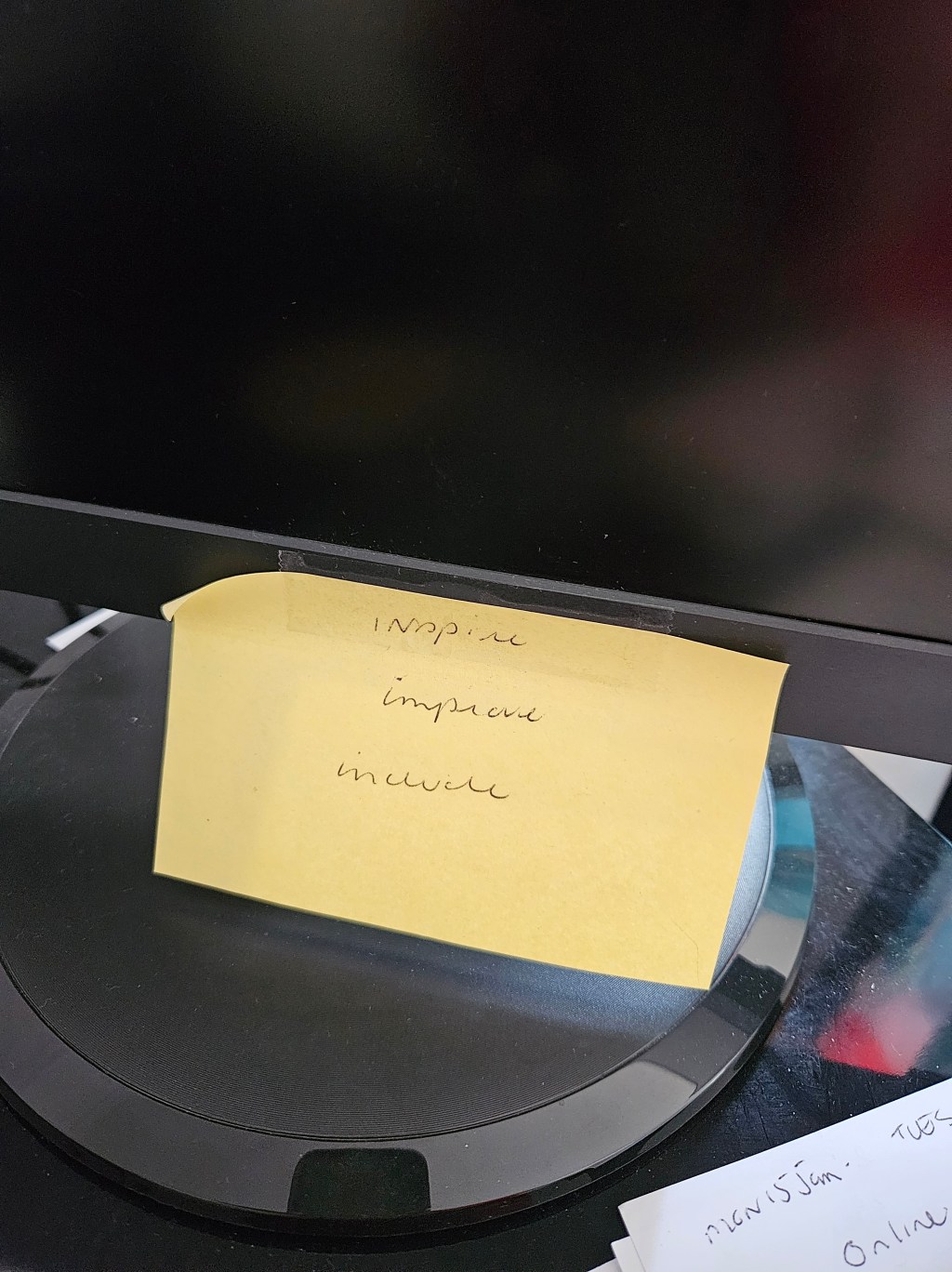
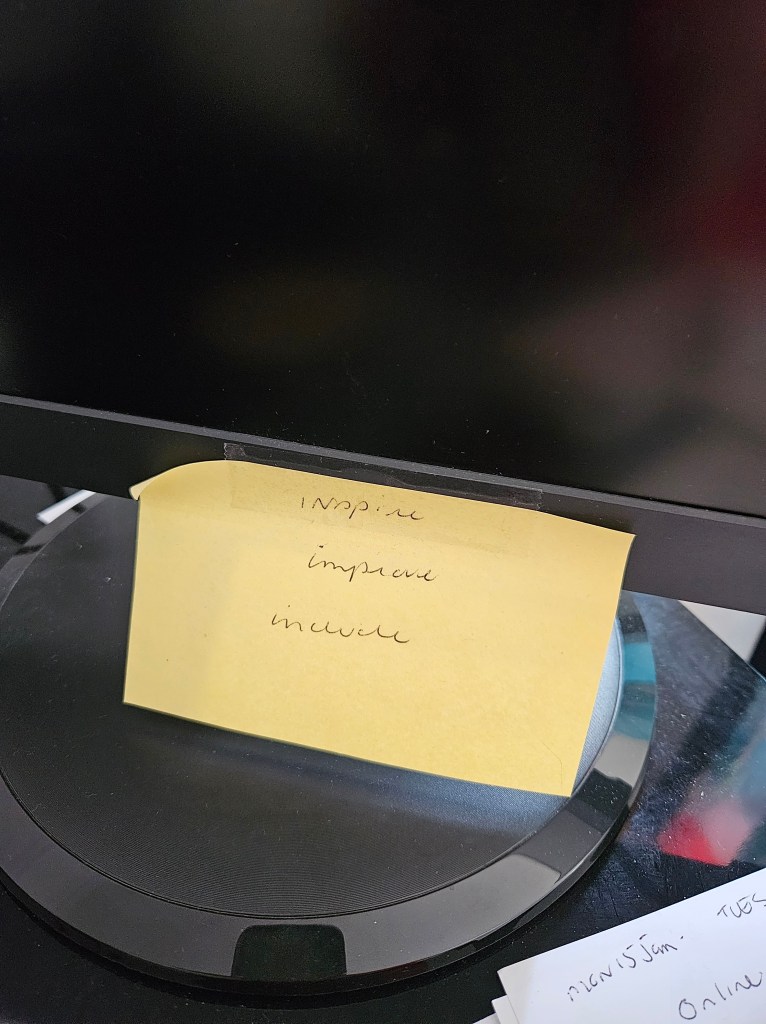
There’s a natural instinct to protect what’s yours. But there’s also an opportunity to notice what’s happening more broadly. My purpose sits quietly on a Post-it on my monitor: Inspire. Improve. Include. Three simple words. A daily reminder of what I’m actually trying to do.
And when I see my language reflected back in the world, I come back to that. Maybe this is it. Not ownership, but alignment. Your ideas might be moving. And if they are, they might be doing exactly what you hoped they would.


Leave a Reply