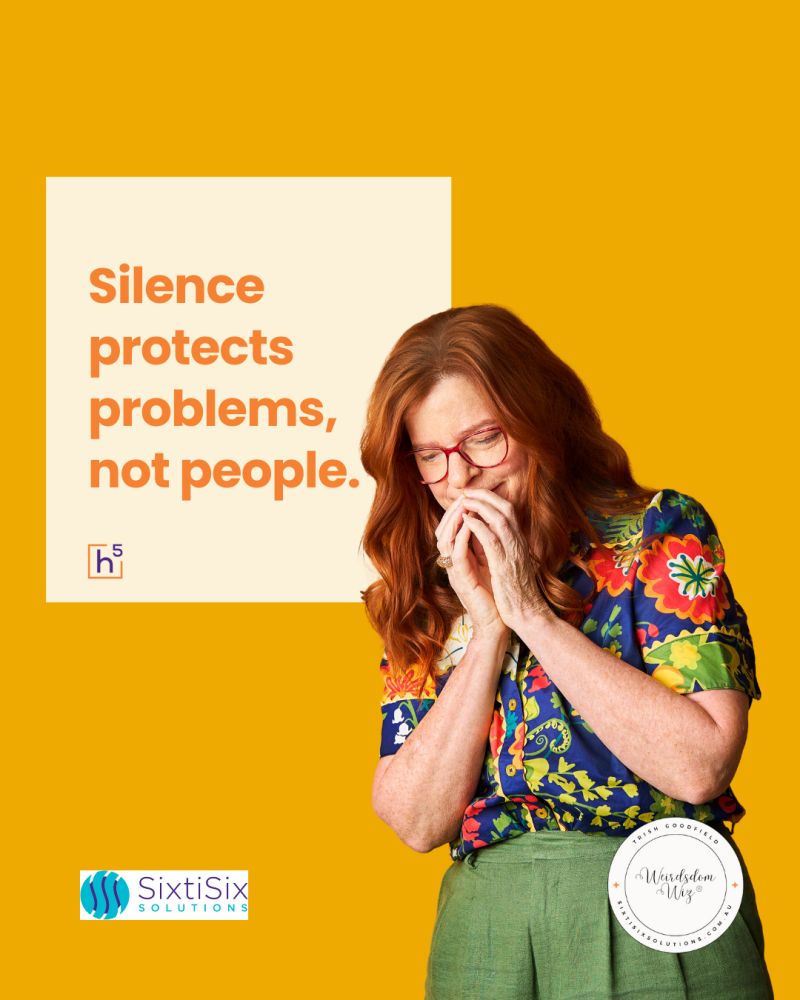
It’s a common impulse in the workplace: when tension rises or an uncomfortable issue surfaces, the easiest response seems to be staying quiet. You tell yourself it’s about keeping the peace, avoiding conflict, or protecting relationships. But here’s a truth: silence doesn’t protect people. It protects problems.
When we choose not to speak up, issues fester. Miscommunications multiply, decisions are made on incomplete information, and mistakes repeat. The problem grows, quietly undermining productivity, morale, and even trust. By avoiding confrontation, we create an environment where problems can thrive, hidden just beneath the surface.
This is where Weird Wisdom® at Work becomes essential. Real risk in the workplace doesn’t come from addressing problems; it comes from ignoring them. Leaders, team members, and collaborators who lean into their unique perspective, their “weird”, are often the ones best equipped to notice what others miss. They see patterns, gaps, and inconsistencies that might otherwise go unnoticed. Their courage to speak up is not about creating drama; it’s about surfacing reality so the team can take action.
Speaking up starts with noticing what others are ignoring. It means raising concerns thoughtfully, asking questions that bring issues into the open, and framing observations in a way that encourages solutions rather than blame. When someone says, “I’m worried this approach might not work,” or “We’ve overlooked this risk,” they are giving the team an opportunity to prevent a bigger problem down the line.
Your voice has power. It can uncover hidden risks, prevent repeated mistakes, and push work in the right direction. Teams that encourage open communication are more resilient, they’re more creative and effective. By addressing problems directly, you enable better decisions, stronger collaboration, and a culture where people feel safe to share their insights.
Of course, speaking up can feel uncomfortable. It often challenges authority, breaks unspoken norms, or goes against the instinct to “keep the peace.” But the discomfort is temporary; the consequences of silence can be lasting. Avoiding difficult conversations may feel like protection in the moment, but it often leads to frustration, disengagement, and systemic inefficiencies.
Stopping the habit of protecting problems starts with mindset. Instead of asking, “Will this cause conflict?” ask, “Will staying silent cause harm?” Shift the focus from self-preservation to team effectiveness. Consider the bigger picture: every issue left unspoken is an opportunity missed for improvement, innovation, or preventing failure.
When you stop protecting problems and start addressing them, you give your team a chance to fix what actually matters. You turn hidden challenges into opportunities for growth. You make your workplace safer, smarter, and more productive. And perhaps most importantly, you model the behavior you want others to emulate, encouraging a culture where honesty, insight, and accountability are valued over comfort and avoidance.
Silence may feel safe, but it comes at a cost. Your courage to speak up is a form of Weird Wisdom® at Work. It transforms hesitation into action, risk into opportunity, and problems into solutions. By using your voice, you help create a team that doesn’t just survive challenges, it thrives because it faces them head-on.
The next time you notice an issue, a risk, or a concern that others aren’t voicing, resist the urge to stay quiet. Step forward, share your perspective, and give the team the chance to deal with reality instead of pretending it doesn’t exist. In the end, protecting problems protects no one. Speaking up protects what matters and that makes all the difference.


Leave a Reply